Rules
Realtor Lead Conversion Benchmarks by Metro: What the Numbers Hide
Metro lead conversion and response time benchmarks, why one national average hides seasonality, plus compliance rules, lead type splits and audit steps.
What to take away
- A national conversion average hides two fast moving variables: how quickly the first call happens and whether local seasonality is buying or selling.
- Metro benchmarks work as ranges tied to a stated window and a single lead type, never as one percentage for the whole country.
- Response time is the cheapest variable to repair, and phone follow-up is governed by the FTC Telemarketing Sales Rule.
- Weather, snowbird migration and foreign buyer withholding rules change the calendar more than they change the script.
- Run an eight week metro sheet before trusting any published comparison.
Why One National Average Hides the Real Spread
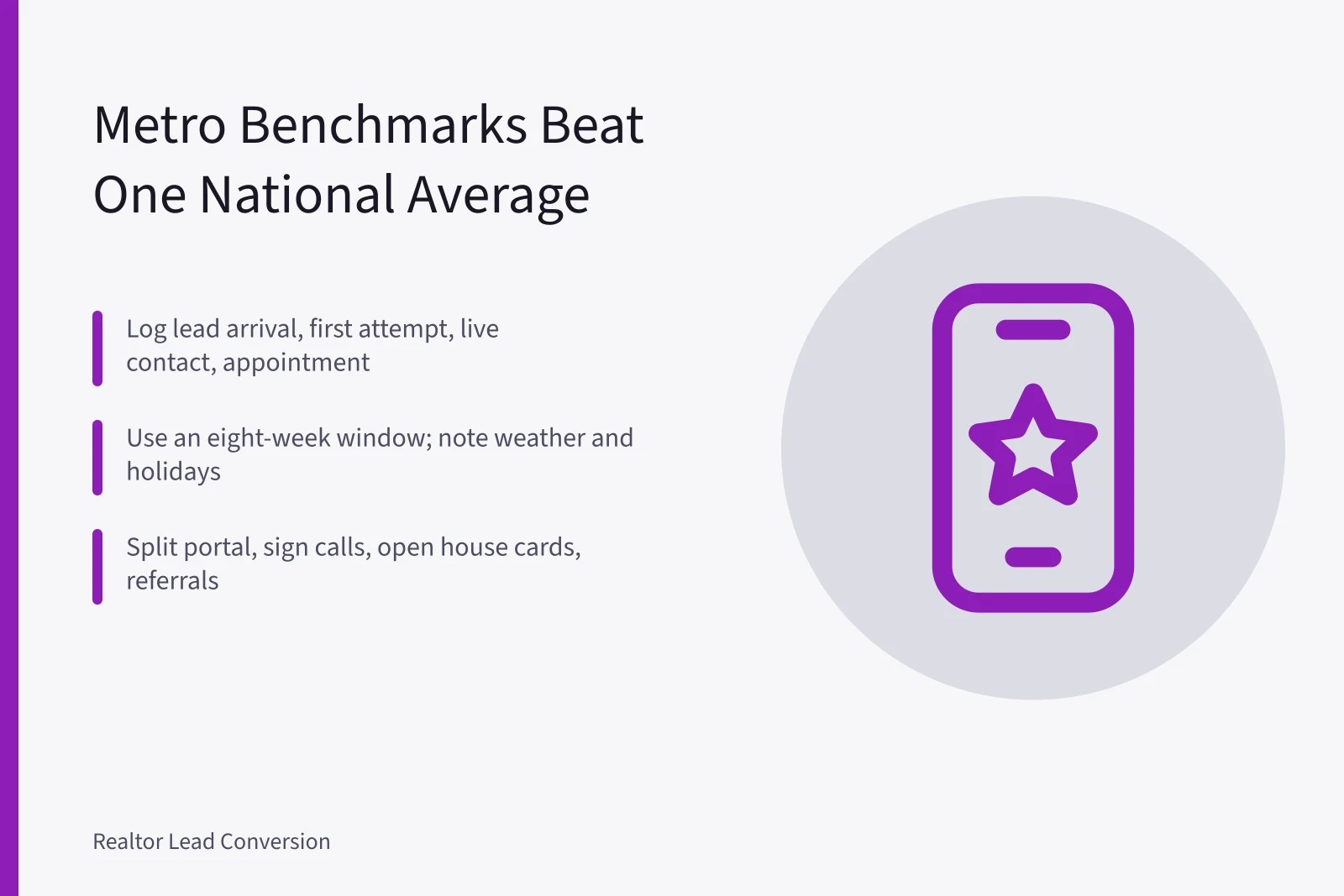
A national figure blends four lead types that behave nothing alike: portal inquiries, sign calls, open house cards and referral introductions. The same conversion optimization principles apply to each type, but the starting point differs.
Seasonality compounds the blend. A Denver listing drawing snow season traffic and a Miami condo drawing snowbird traffic both produce leads, on opposite calendars. Adding them into one rate cancels the signal and leaves a middle number that describes nobody.
Sample windows matter too. A short window that lands inside a rainy stretch will look worse than the same market measured across a full year.
Metro Benchmark Ranges Worth Tracking
| Benchmark | Range to record | What a national average hides |
|---|---|---|
| First response time | Minutes on a warm portal lead, same day on older inquiries | Some metros answer by phone, others send a text |
| Contact rate | Share of leads reached by voice | Portal volume per metro changes the denominator |
| Appointment rate | Share of contacted leads booked | Weather and school calendars shift booking weeks |
| Contract to close | Days from accepted offer to funding | State closing and title practice differ |
| Repeat and referral share | Share of closings with no new lead cost | Repeat business is invisible in lead source reports |
Fill these ranges from your own CRM exports. A published national number cannot stand in for a metro sample with a stated window.
A Four-Step Metro Benchmark Audit
- Pick one metro and one lead type. Do not mix portal inquiries with sign calls.
- Log four timestampslead arrival, first attempt, first live contact and appointment.
- Set a window of at least eight weeks and note weather or holiday events inside it.
- Compare the metro against your other metros, not against a national figure.
That window is also the shape of an eight-week lead generation pilot, where a set audience, a useful offer and measured outcomes replace ad hoc outreach.
Getting the basics right first is cheaper than optimizing a channel that should never have opened. That is the case made in real estate marketing strategy for a defined client decision, verified claims and controlled channels.
Lead Type Splits Inside One Metro
- Portal inquiriesdecay fastest, so the first hour carries the most weight.
- Sign callsintent is high, same day response is the floor.
- Open house cardspermission is thin, plan a long nurture.
- Referralsconversion is high, speed matters less than the introduction.
- Past client repeatsno acquisition cost, so track them apart.
Example: Denver, Seattle and Miami on One Sheet
A single sheet with columns for month, lead type, first response time and appointments shows Denver stalling in deep snow weeks and Seattle slowing through the rainy stretch. Denver and Seattle lead timing gives a follow-up calendar for each market.
Miami diverges again. Snowbird arrivals, FIRPTA withholding at 15 percent on certain foreign seller proceeds and Florida DBPR advertising rules shape how Canadian buyer leads arrive and convert. Miami snowbird and FIRPTA timing covers the calendar and the paperwork.
A metro benchmark is a range plus a window plus a lead type. Remove any one of the three and the number stops meaning anything.
Compliance Rules That Move the Numbers
Phone follow-up is regulated. The FTC Telemarketing Sales Rule sets calling hours, disclosure duties and Do Not Call obligations for businesses following up by phone.
Canadian leads carry separate duties. Texting and storing lead data for Canadian consumers falls under PIPEDA privacy rules and provincial law. Those rules decide how long a cold lead can sit in a nurture sequence.
Costs sit on the other side of the ledger. Closing costs, mortgage licensing rules and title charges differ by state, so the same conversion rate produces different revenue per lead.