Rules
Real Estate Marketing Trends 2027: What Agents Should Prepare for Now
Real estate marketing trends 2027: where lead budgets go, how long conversion takes, and the calls, texts, and consent rules agents must prepare for.
What to take away
- Portal lead prices keep climbing, so cost per closed deal is the number that matters.
- Speed of first contact and a written follow-up sequence beat any single ad platform.
- Consent records for calls and texts become part of the marketing asset in the United States and Canada.
- Representation, first-party evidence, governed AI, accessible media, and portability carry into 2027.
Where the agent marketing budget actually goes
Most budgets split across four lines: purchased leads, paid search and social, the customer relationship management system, and hours spent working the database. Portals such as Zillow and Realtor.com sell shared or exclusive contact data. Exclusive leads cost more and usually convert at a higher rate.
Paid search and social bill per click or per lead, and the price moves with season and local competition. Tools like Follow Up Boss, Sierra Interactive, BoldTrail and Ylopo charge per user each month plus add-ons for texting and data enrichment. Migration and cleanup add weeks.
The line most agents miss is data hygiene. Duplicate records, missing consent fields, and leads with no assigned owner decay quietly. A 2027 budget should fund list cleanup the same way it funds ad spend.
Referrals and past clients stay the cheapest source on the books, because the lead arrives with trust already in place. The work shifts to record keeping and repeat contact rather than buying more names.
How long conversion really takes
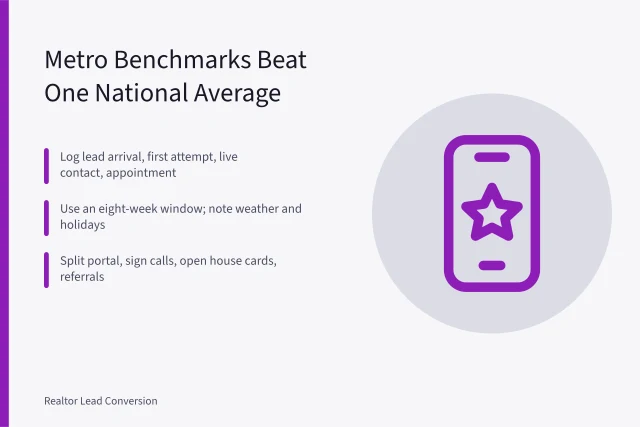
A lead that waits two days for a reply rarely books an appointment. A lead that hears back within minutes enters a real conversation. Conversion marketing treats that first exchange as the point where intent is confirmed or lost, which is why reply time outranks creative.
Timelines differ by motivation. A buyer who is already preapproved can move within weeks. A seller who is still comparing agents may take a year. Both paths reward a sequence rather than a single call.
That gap is why scoring helps. Lead scoring sorts contacts by behavior and stated intent, so the same week gets spent differently on a ready buyer and a curious browser. The practical detail is set out in Realtor Lead Conversion Cost What Agents.
Table: What still holds in 2027
| Trend | What changes by 2027 | What it means for conversion |
|---|---|---|
| Portal lead pricing | Shared leads stay cheaper than exclusive ones as inventory grows | Cost per closed deal becomes the benchmark |
| First-party data | Agent sites and newsletters carry more targeting weight | Owned lists beat rented audiences |
| AI-assisted follow-up | Drafting and scheduling speed up, disclosure rules get clearer | The agent still owns the final message |
| Consent records | Regulators ask for proof rather than memory | Store the opt-in text with a timestamp |
| Lead portability | Agents change brokerages more often | Leads travel with the agent who earned them |
Example: one lead from first click to signed agreement
- Hour 0the lead arrives from a portal or a Local Services Ad. The CRM records source, consent language, and timestamp.
- Hour 0 to hour 1one call attempt and one text that names the agent and the license state.
- Day 1 to day 7two short emails and one call, each referencing a specific property or neighborhood.
- Week 2 to week 6saved searches, lender preapproval guidance, and one local market note.
- Week 7 to week 13a decision on whether the lead keeps ad spend or moves to long-term nurture.
Calls, texts, and the rules that follow a lead
Phone follow-up in the United States sits under the Telemarketing Sales Rule. The FTC compliance guidance covers calling times, required disclosures, and do not call obligations for businesses that call leads.
In Canada, texting and stored lead data sit under the PIPEDA overview, which sets consent and handling expectations for personal information. Agents working both countries should keep two consent templates.
What to prepare before January 2027
- Assign one owner to every lead record and remove duplicates monthly.
- Write a five-touch follow-up sequence and load it into the CRM.
- Store the exact opt-in text and timestamp for each phone number.
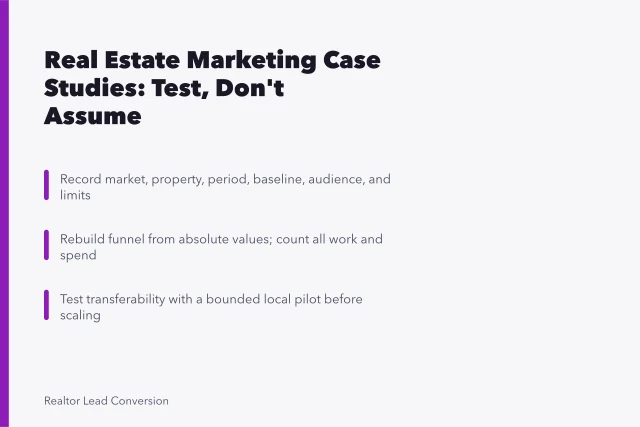
- Audit which sources produced your last ten signed agreements.
The strategy themes that carry into 2027
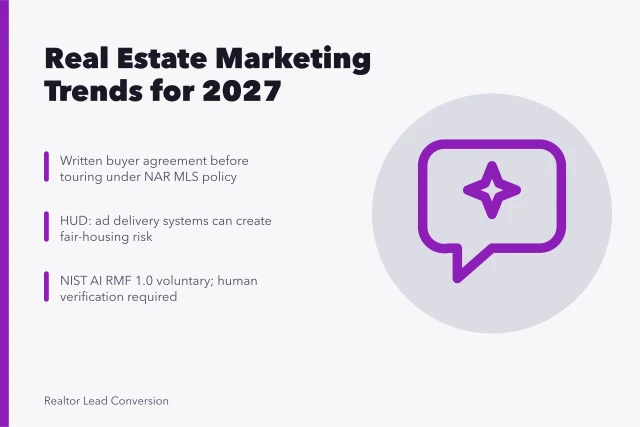
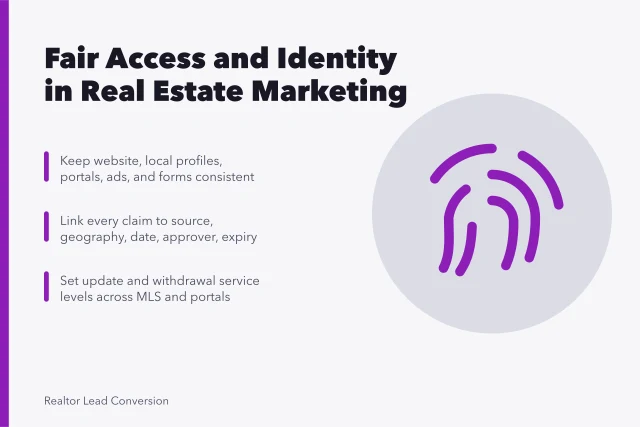
Representation, ad delivery records, first-party evidence, governed AI, accessible media and portability shape next year. The real estate marketing strategy trends for 2027 explain each theme and how to test it against your own numbers.
Agents who treat leads as records with a lifecycle, not names on a list, hold their cost per deal steadier than agents who chase volume.